
Introduction: Why Is SEO Important?
Imagine creating a great website, publishing useful content, and offering an excellent product or service—but almost nobody can find you online.
That’s where SEO becomes important.
SEO, or Search Engine Optimization, helps improve the visibility and discoverability of your website in organic search.
When people search for information, products, or services related to your business, appearing in relevant search results can create valuable opportunities.
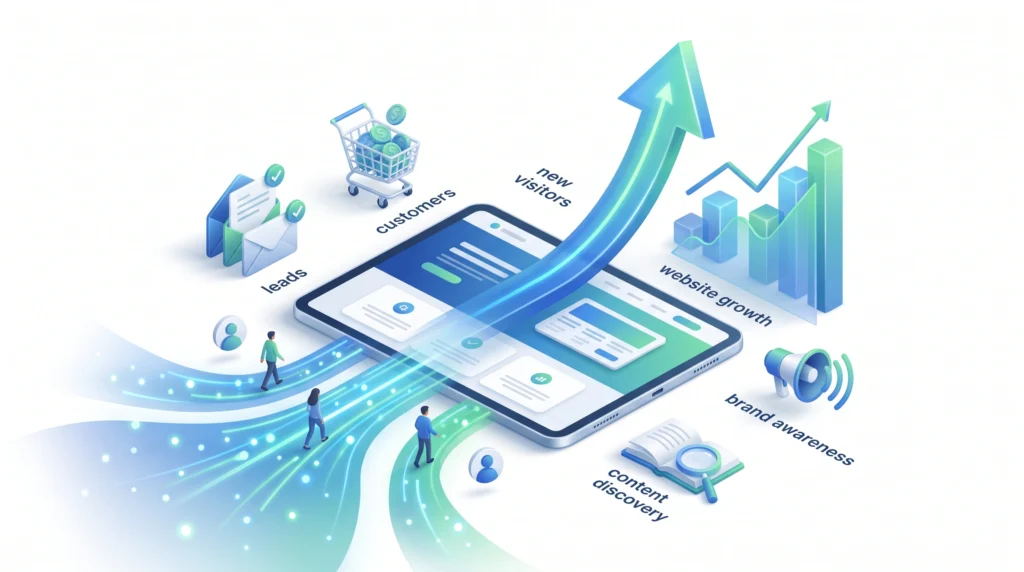
SEO can help you:
- Increase online visibility
- Attract relevant organic traffic
- Reach people actively searching
- Build brand awareness
- Generate leads
- Support sales
- Grow your online presence
- Build long-term search visibility
SEO isn’t a magic shortcut, and it doesn’t guarantee first-page rankings.
Instead, it is a long-term process of making your website more useful, accessible, relevant, and discoverable.
What Makes SEO So Important?

The internet is crowded.
Millions of websites compete for attention.
Simply publishing a website doesn’t guarantee that people will discover it.
SEO helps you build a stronger connection between:
What People Search For → What Your Website Offers
When that connection is clear and useful, your website has a better opportunity to reach relevant audiences through search.
SEO Helps Increase Website Visibility
One of the biggest benefits of SEO is improved visibility in organic search.
For example, imagine you run a website about fitness.
You publish an article targeting the topic:
“Best Home Workouts for Beginners.”
People searching for beginner home workouts may discover your page through search.
Without search visibility, even excellent content can remain difficult for new audiences to find.
SEO helps make your content more discoverable.
SEO Can Increase Organic Traffic
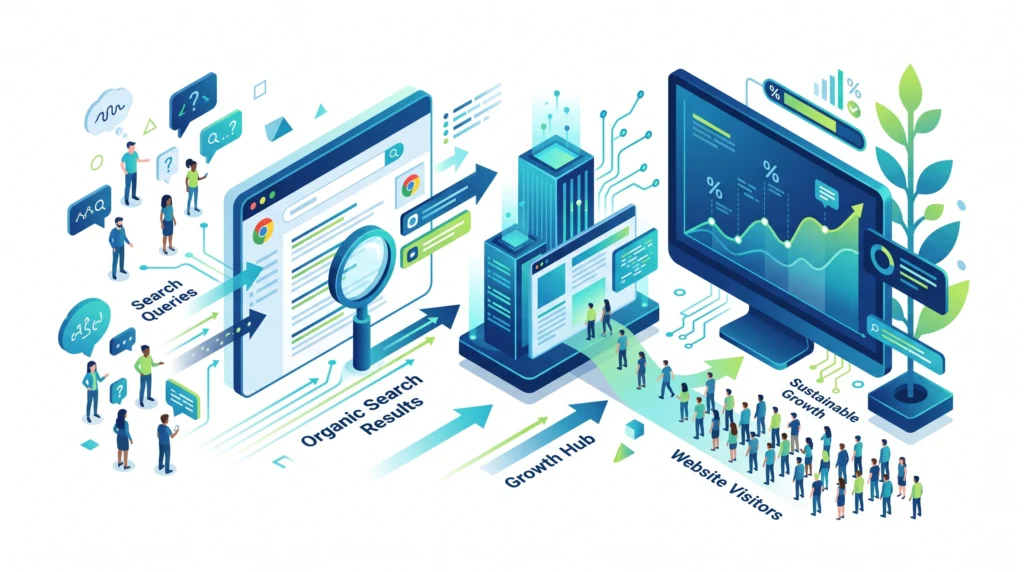
Organic traffic comes from unpaid search results.
Suppose someone searches:
“how to improve website speed.”
If your website has a helpful page answering that question and the page appears in relevant search results, the user may visit your website.
That visitor represents an opportunity.
They may:
- Read another article
- Subscribe to your newsletter
- Contact your business
- Purchase a product
- Share your content
- Return to your website later
SEO can therefore help turn search visibility into meaningful website activity.
SEO Helps You Reach People With Search Intent
Search traffic can be valuable because users are often actively looking for something.
For example:
“What is SEO?”
This suggests informational intent.
“Best SEO tools for small business”
This suggests research or commercial intent.
“Buy SEO software”
This suggests transactional intent.
By understanding search intent, you can create pages that match what users actually need.
That can make your traffic more relevant.
SEO Builds Brand Awareness

People don’t always become customers the first time they discover a website.
They may see your brand several times before taking action.
For example, someone might:
- Discover your blog through Google.
- Read an article.
- See another useful article from your website later.
- Visit your website again.
- Eventually become a customer.
Consistent search visibility can contribute to brand awareness over time.
SEO Can Generate Leads
SEO isn’t only about traffic.
The quality and relevance of that traffic matter.
Imagine you offer web design services.
Someone searches:
“best website designer for small businesses.”
If your website provides a useful page addressing that need, the visitor could become a potential lead.
This is why SEO should be connected to business goals.
A useful way to think about it is:
Search Visibility → Relevant Traffic → Engagement → Leads → Customers
Not every visitor will become a customer, but relevant organic traffic can create opportunities.
SEO Can Support Sales and Revenue

For ecommerce websites and service businesses, SEO can help potential customers discover products and services.
Consider an online store selling running shoes.
A customer might search:
“best running shoes for beginners.”
They discover an educational article.
Then they explore:
Running Shoes → Product Category → Product Page → Purchase
SEO can therefore support the customer journey before a purchase happens.
SEO Helps You Build Long-Term Online Growth
Paid advertising can provide immediate visibility while a campaign is running.
SEO works differently.
You invest in creating useful content and improving your website, and those improvements can continue to generate organic visibility over time.
However, SEO isn’t completely passive.
Search results change.
Competitors publish new content.
User needs change.
Websites need maintenance.
Successful SEO therefore requires ongoing improvement.
Think of SEO as a long-term asset rather than a one-time task.
SEO Can Be Cost-Effective Over Time
SEO requires resources.
You may invest in:
- Content creation
- SEO tools
- Technical improvements
- Website development
- SEO professionals
- Research
- Content updates
So SEO isn’t “free.”
However, organic traffic doesn’t work exactly like paid advertising where you generally pay for each advertising click.
A successful SEO program can potentially generate valuable traffic without paying for every individual organic visit.
The actual return depends on your industry, competition, website, content, conversion rates, and strategy.
SEO Helps Small Businesses Compete Online
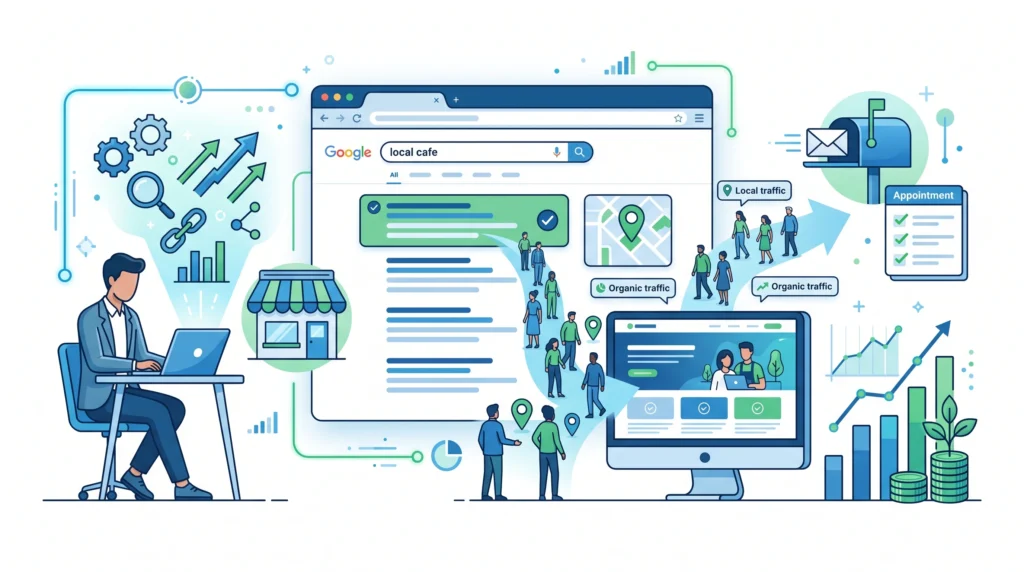
A small business may not have the advertising budget of a large corporation.
But it can still create useful content targeting specific questions, topics, products, and local searches.
For example, a local bakery could create content around:
- Best birthday cakes
- Wedding cakes
- Custom cakes
- Cake delivery
- Bakery near me
Relevant SEO can help the business reach people actively searching for those services.
SEO Helps You Understand Your Audience
SEO isn’t only about rankings.
Search data can reveal what people care about.
Keyword and search research can help you discover:
- Common questions
- Problems
- Product interests
- Information gaps
- Trends
- Customer needs
This information can improve your:
- Content strategy
- Product strategy
- Marketing
- Customer education
- Website structure
In this way, SEO can become a valuable source of audience insights.
SEO Improves Content Strategy
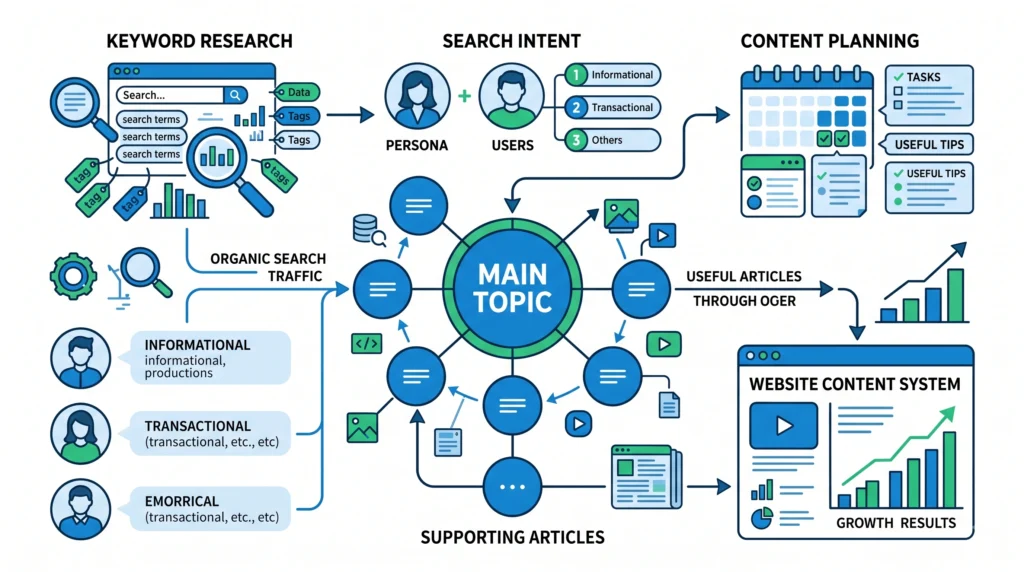
SEO can help answer a very important content question:
“What should we create?”
Instead of publishing random articles, you can research what your audience actually searches for.
For example:
Main Topic: SEO
Supporting topics:
- What is SEO?
- How search engines work
- Keyword research
- On-page SEO
- Technical SEO
- Link building
This creates a connected content structure.
SEO Supports Better Website Structure
SEO encourages you to think carefully about how your website is organized.
A logical structure might look like:
Homepage
→ SEO
→ SEO Basics
→ Keyword Research
→ On-Page SEO
→ Technical SEO
→ Link Building
This structure can make it easier for users to navigate between related topics.
It can also help search engines discover relationships between pages.
SEO and User Experience
SEO and user experience aren’t exactly the same thing, but they often work well together.
A good website should be:
- Easy to navigate
- Fast enough for users
- Mobile-friendly
- Readable
- Accessible
- Clear
- Helpful
If visitors struggle to use your website, more search visibility won’t automatically solve the problem.
The best approach is to improve the experience for real users while maintaining a technically accessible website.
SEO vs Paid Advertising
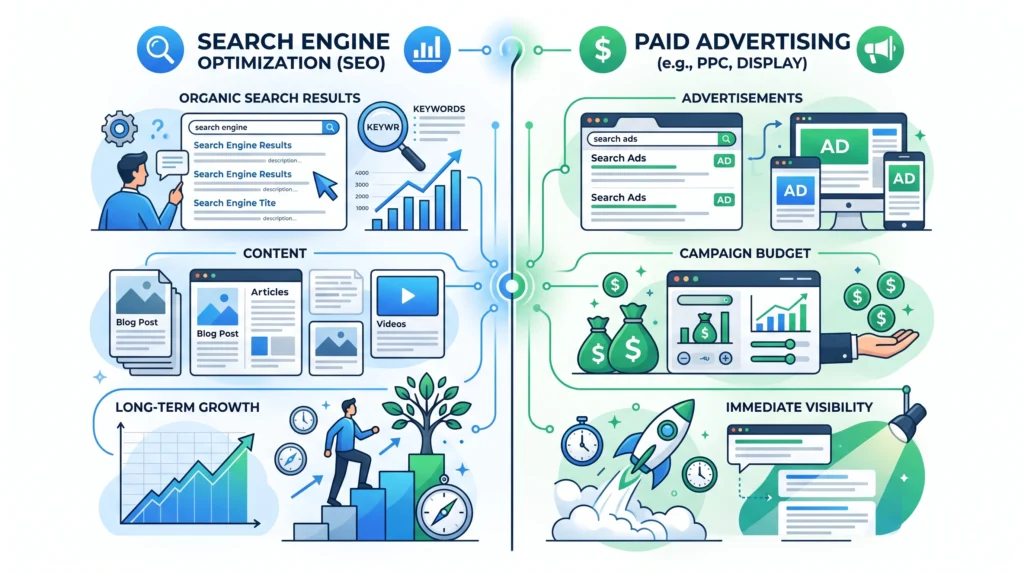
SEO and paid advertising can work together, but they are different.
SEO
Focuses on earning organic visibility through useful content, technical accessibility, relevance, and other SEO factors.
Paid Advertising
Uses paid placements to reach audiences according to campaign settings and advertising budgets.
Many businesses use both approaches.
Paid advertising can support immediate campaigns, while SEO can contribute to long-term organic visibility.
What Happens If You Ignore SEO?
Not every website needs an aggressive SEO campaign.
But ignoring search visibility completely can mean missing opportunities to reach people who are already searching for your products, services, or information.
Potential challenges can include:
- Lower organic visibility
- Fewer opportunities to attract search traffic
- Competitors becoming more discoverable
- Content remaining difficult to find
- Missed audience insights
The important point is not to fear low rankings.
Instead, use SEO to understand where your website can improve.
Common SEO Mistakes That Can Hurt Growth
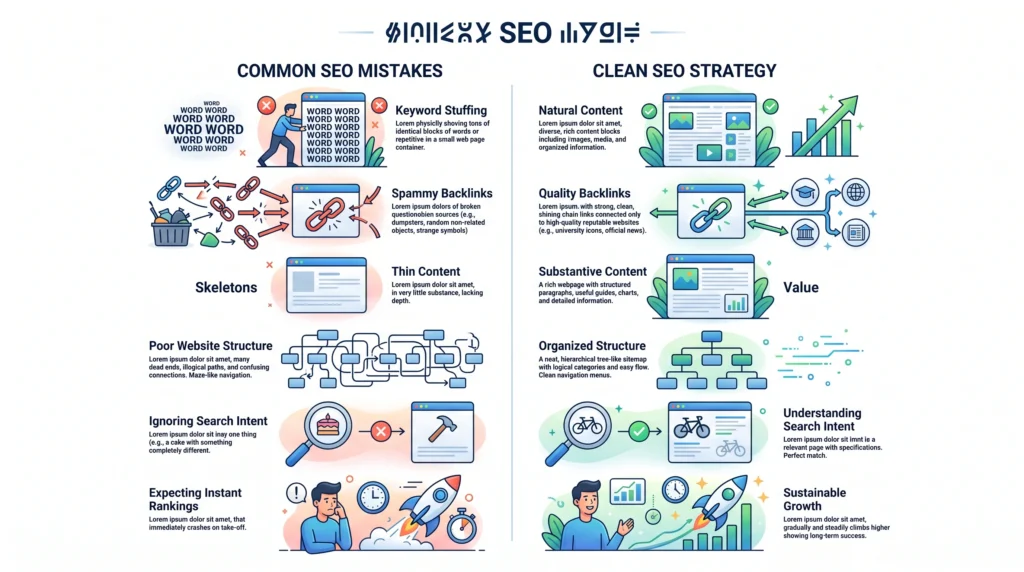
Keyword Stuffing
Using a keyword excessively can make content unnatural and difficult to read.
Low-Quality Content
Publishing content without meaningful value can make it difficult to satisfy users.
Spammy Link Building
Manipulative or low-quality backlink tactics can create unnecessary risk.
Ignoring Search Intent
A page can target a keyword but still fail to answer what users actually want.
Expecting Instant Results
SEO generally requires patience, testing, consistency, and ongoing improvement.
How to Measure the Success of SEO
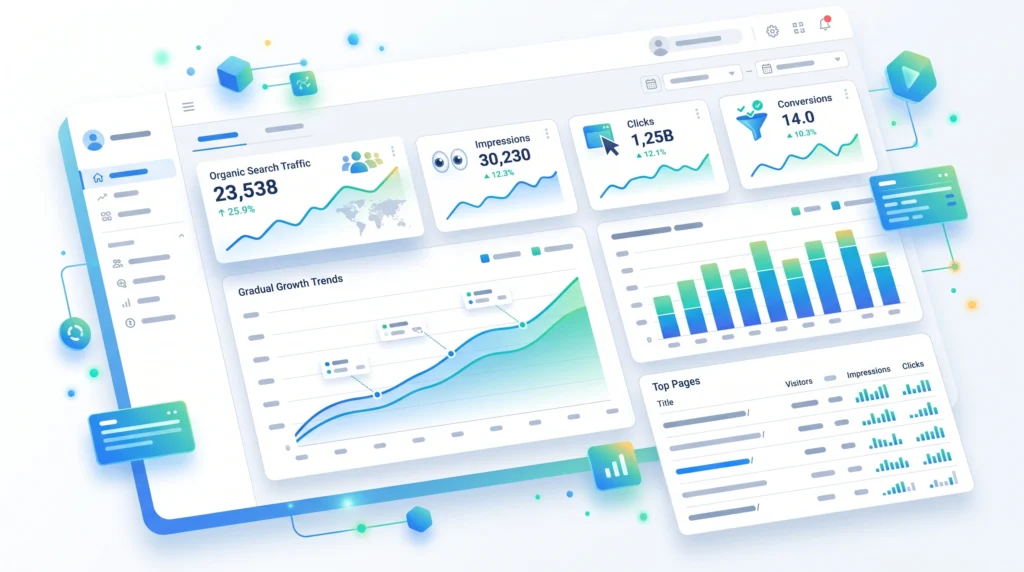
Don’t measure SEO success using rankings alone.
Depending on your goals, useful metrics can include:
- Organic traffic
- Search impressions
- Search clicks
- Relevant keyword visibility
- Leads
- Sales
- Conversions
- Engagement
- Revenue
The most important metrics depend on what your website is trying to achieve.
For a blog, traffic and engagement may matter.
For an ecommerce website, organic revenue and conversions may matter more.
For a service business, qualified leads may be the priority.
Simple SEO Growth Strategy for Beginners
Use this simple framework:
Understand → Research → Create → Optimize → Measure → Improve
Understand
Understand your audience and business goals.
Research
Research topics, keywords, competitors, and search intent.
Create
Create useful content that solves real problems.
Optimize
Improve your pages and technical foundations.
Measure
Track organic visibility, traffic, leads, and conversions.
Improve
Update your strategy based on results and changing user needs.
Is SEO Still Important in 2026?
Yes, SEO remains important because search continues to be a major way people discover information, products, services, businesses, and websites.
At the same time, search is evolving.
AI-powered search experiences and new ways of presenting information mean that website owners need to focus on fundamentals rather than outdated tricks.
The strongest foundation remains:
Helpful Content + Clear Structure + Technical Accessibility + Relevance + User Value
Don’t optimize only for a search engine.
Create something genuinely useful for the person searching.
SEO Benefits Checklist
Visibility
- Improve organic discoverability
- Reach relevant search queries
- Increase brand exposure
Traffic
- Attract relevant organic visitors
- Build sustainable traffic opportunities
- Reach people actively searching
Business
- Generate qualified leads
- Support conversions
- Support sales
- Grow online presence
Content
- Understand audience questions
- Build useful content
- Improve topic coverage
- Create connected content clusters
Long-Term Growth
- Monitor SEO performance
- Update content
- Fix technical issues
- Improve user experience
- Continue learning and testing
Frequently Asked Questions
Why Is SEO Important for a Website?
SEO can help a website become more discoverable in organic search, attract relevant traffic, build visibility, and create opportunities for leads, sales, and long-term growth.
What Are the Main Benefits of SEO?
The main benefits can include increased organic visibility, relevant traffic, brand awareness, audience insights, leads, sales opportunities, and long-term online growth.
Is SEO Better Than Paid Advertising?
Neither is universally better.
SEO focuses on organic visibility, while paid advertising provides paid placements.
The right approach depends on your goals, budget, industry, timeline, and audience.
Can SEO Increase Website Traffic?
Yes. Effective SEO can help eligible pages become more visible for relevant searches, which can increase organic traffic.
However, traffic isn’t guaranteed, and quality and relevance matter more than simply increasing visitor numbers.
Does SEO Help Small Businesses?
Yes.
Small businesses can use SEO to target specific topics, products, services, and local searches that are relevant to their customers.
How Long Does SEO Take to Show Results?
There is no fixed timeline.
Results depend on competition, website history, content quality, technical health, search demand, authority, and many other factors.
SEO should generally be approached as a long-term strategy.
Is SEO Worth It in 2026?
For many websites, yes.
SEO can still provide valuable organic visibility, but strategies should focus on useful content, relevance, technical accessibility, and real user needs rather than outdated ranking tricks.
Final Thoughts
So, why is SEO important?
Because having a great website isn’t enough if the people who need it cannot discover it.
SEO can help connect your website with people who are actively searching for information, products, and services related to what you offer.
The biggest opportunities include:
More Visibility
More Relevant Traffic
Stronger Brand Awareness
More Leads
More Business Opportunities
Long-Term Online Growth
But remember:
SEO is not about chasing a guaranteed number-one position.
It’s about building a website that is useful, accessible, relevant, and worth discovering.
If you focus on helping people first and continuously improve your website, SEO can become a powerful part of your long-term digital strategy.
Internal Linking Plan
Link this article naturally to:
Article 1
Anchor Text:
what is SEO
Article 2
Anchor Text:
how search engines work
Article 4
Anchor Text:
keyword research
Article 5
Anchor Text:
on-page SEO
Article 6
Anchor Text:
technical SEO
Article 7
Anchor Text:
off-page SEO and link building
Final Publishing Checklist
- H1 used once
- H2 headings clearly labelled
- H3 headings clearly labelled
- Focus keyword used naturally
- SEO title prepared
- Meta title prepared
- Meta description prepared
- URL slug prepared
- Positive words included naturally
- Caution words used naturally
- SEO importance explained
- Organic traffic explained
- Search intent explained
- Brand awareness explained
- Lead generation explained
- Sales and revenue explained
- Small business benefits included
- Content strategy included
- User experience discussed
- SEO vs paid advertising explained
- Common mistakes included
- Measurement section included
- Beginner strategy included
- 2026 SEO context included
- SEO checklist included
- FAQs included
- Image placements marked
- Image prompts included
- Image filenames included
- Alt text included
- Internal linking plan included
- Keyword stuffing avoided
- No guaranteed ranking claims
- Article is beginner-friendly
- Article is easy to scan
- Content provides genuine value
