


Introduction: How Do Search Engines Work?
Have you ever wondered what happens after you type something into Google and press Search?
Within a very short time, the search engine can return a list of webpages, images, videos, businesses, products, and other information related to your query.
But how does it decide what to show?
The process is much more sophisticated than simply looking for pages that contain the exact words you typed.
Search engines need to discover webpages, understand their content, store information about eligible pages, and then provide useful results when someone searches.
A simple way to understand the process is:
Crawl → Index → Understand → Rank → Serve
In this guide, you’ll learn how search engines work from beginning to end and why understanding this process is important for SEO.
What Is a Search Engine?
A search engine is a system designed to help people find information on the internet.
Examples include:
- Bing
- Other search platforms and specialized search systems
When you enter a query, the search engine processes your request and returns results that its systems consider relevant and useful.
For example, if you search:
“How do search engines work?”
The search engine tries to identify pages that can best answer that question.
The goal isn’t simply to find pages containing the words “search engines work.”
It is to understand the meaning and intent behind the query and provide useful results.
The Basic Search Engine Process
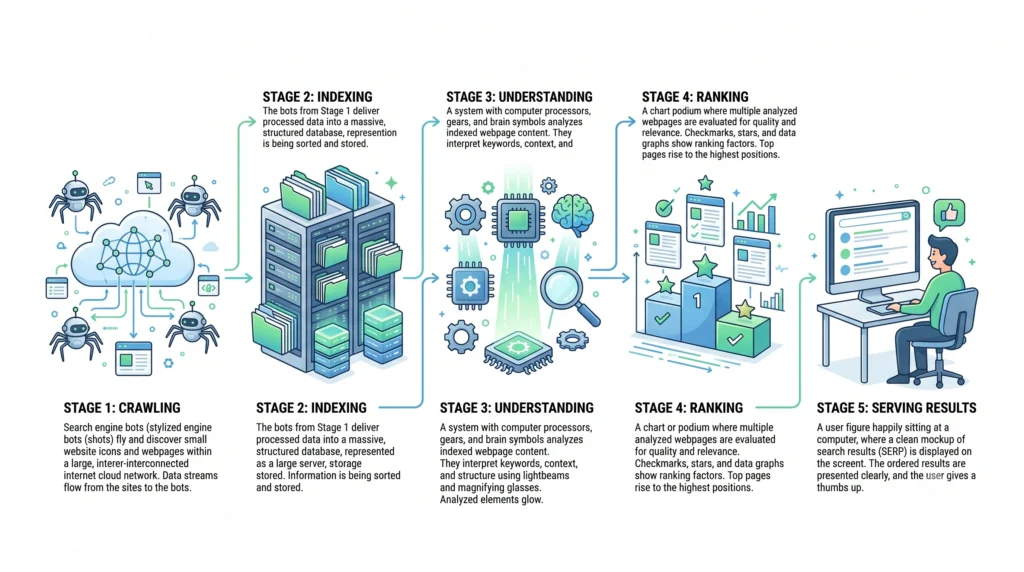
At a high level, search engines perform several major tasks.
1. Crawling
Search engines discover webpages through automated systems called crawlers.
2. Indexing
Information about discovered pages may be processed and stored in a search index.
3. Understanding
Search systems analyze content and try to understand what webpages are about and how they relate to search queries.
4. Ranking
When someone searches, systems evaluate relevant information and determine which results to show and in what order.
5. Serving Results
The search engine displays a search results page containing relevant information for the user’s query.
This process happens extremely quickly from the user’s perspective.
What Is Search Engine Crawling?
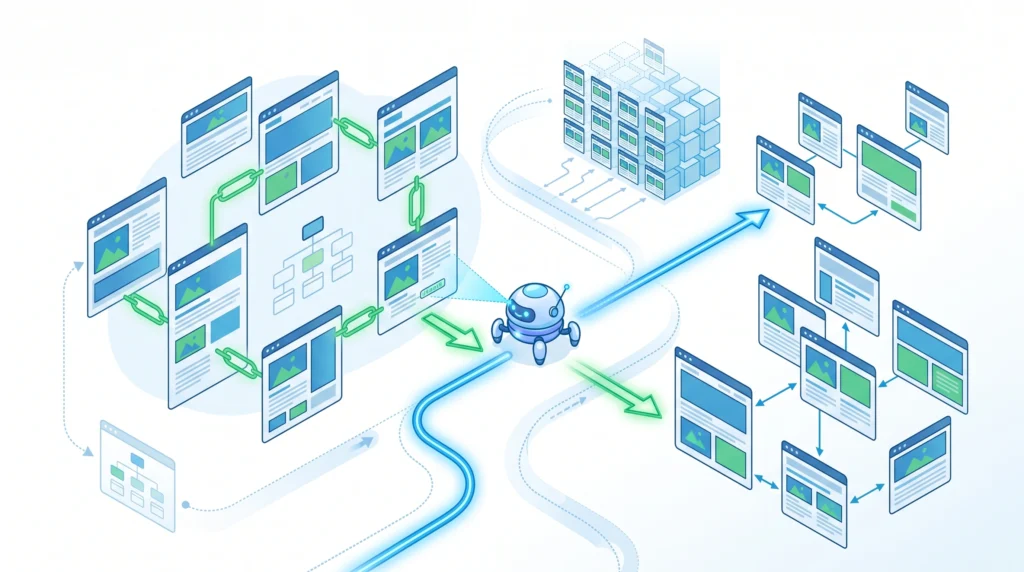
Crawling is the process through which search engine crawlers discover and access webpages.
A crawler can discover pages through different pathways, including links from other pages.
Imagine the internet as a huge network of connected roads.
Webpages are destinations.
Links are roads.
A crawler can follow those roads to discover new destinations.
This is one reason website structure and internal linking are important.
What Is a Search Engine Crawler?
A crawler is an automated system that visits webpages to discover and access information.
Different search engines use their own crawling systems.
For SEO, website owners need to make sure important pages can be accessed appropriately.
What Is Search Engine Indexing?
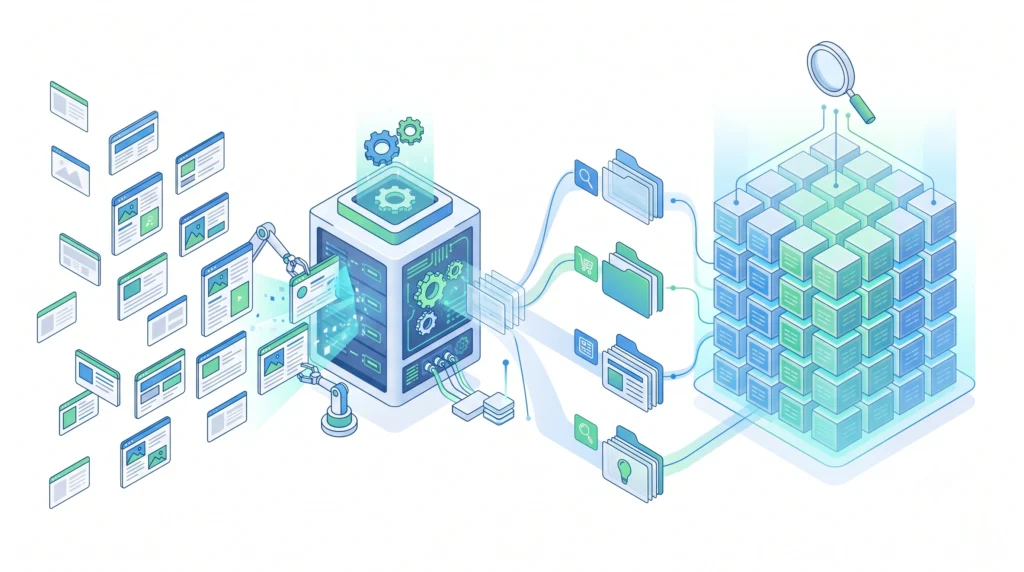
After a search engine discovers a webpage, it may process information about that page and store it in its index.
This process is called indexing.
Think of the search index as a huge organized information system.
When a user performs a search, the search engine can retrieve relevant information from its systems instead of starting from scratch and crawling the entire web at that moment.
Does Crawled Mean Indexed?
Not necessarily.
A search engine may discover a URL but not necessarily include that page in its index.
There can be different reasons why a page may not be indexed.
That’s why SEO involves both:
Discoverability + Indexability
How Do Search Engines Understand Content?
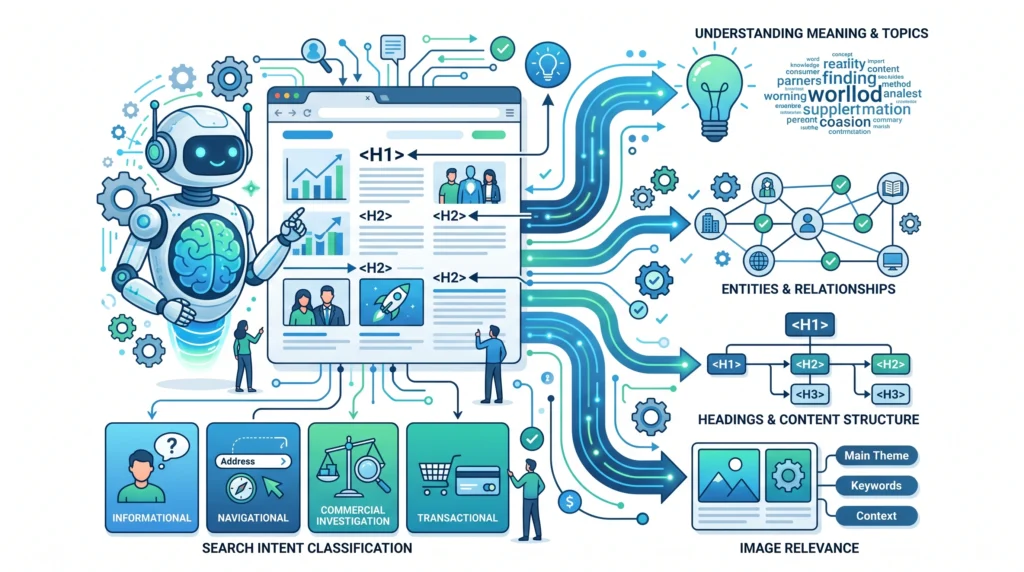
Search engines have become much better at understanding language and the meaning behind content.
They don’t simply count how many times a word appears on a page.
Search systems can consider context, relationships between concepts, language, page structure, and many other signals.
For example, a page about “Apple” could refer to:
- The fruit
- A technology company
The surrounding context helps determine which meaning is relevant.
This is why creating clear, useful, well-structured content is important.
What Is Search Ranking?
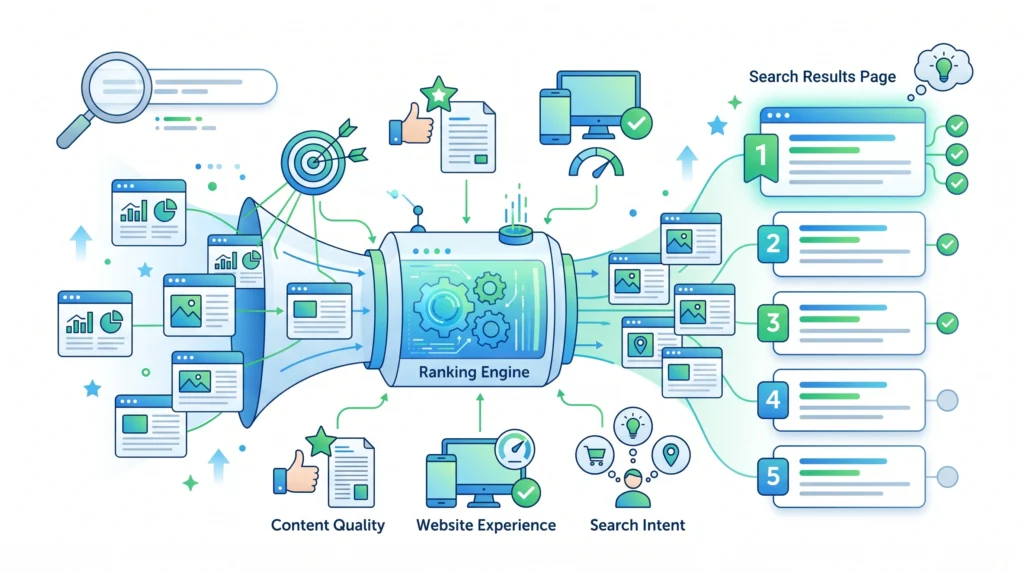
Ranking refers to how search results are ordered and presented for a particular query.
Search engines use complex systems to determine which results may be most useful.
There is no single universal “ranking score” that website owners can simply optimize.
Instead, search systems consider many signals and systems.
These can relate to areas such as:
- Relevance
- Content usefulness
- Search intent
- Page experience
- Website accessibility
- Quality and context
- Links and references
- Many other signals and systems
The exact systems used by search engines are complex and continually evolving.
What Happens When You Search on Google?

Imagine you search:
“best beginner SEO guide”
The search engine needs to determine:
- What does the query mean?
- What information is the user looking for?
- Which indexed pages are relevant?
- Which results may be useful?
- How should the results be presented?
The search engine then displays a results page designed to help you find the information you need.
What Is Search Intent?
Search intent is the reason behind a search query.
For example:
Informational Intent
“What is SEO?”
The user wants to learn something.
Navigational Intent
“Google Search Console”
The user may be trying to reach a particular website or service.
Commercial Investigation
“Best SEO tools for beginners”
The user may be researching options before making a decision.
Transactional Intent
“Buy SEO software”
The user is closer to taking a purchasing action.
Understanding search intent helps website owners create pages that answer the right questions.
What Are Search Engine Algorithms?

A search engine algorithm is part of the system used to process information and determine appropriate search results.
Search engines use sophisticated automated systems rather than one simple formula.
These systems can evaluate many different signals and relationships.
This is why there is no reliable shortcut such as:
“Put this keyword exactly 17 times and Google will rank you.”
SEO doesn’t work that way.
Instead, focus on making your website:
- Useful
- Accessible
- Relevant
- Well structured
- Easy to understand
- Valuable to your audience
How Links Help Search Engines Discover Pages
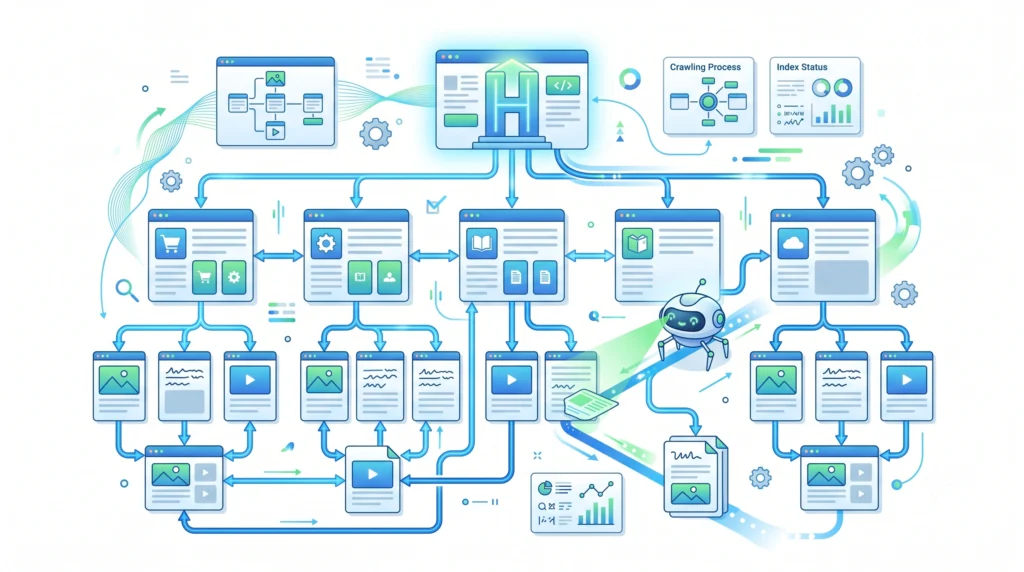
Links are important for website discovery and navigation.
For example, a website might have:
Homepage → SEO Guide → Keyword Research → On-Page SEO
Internal links connect these pages.
They can help users navigate your website and can also help search engines discover related pages.
External links can also connect websites across the wider web.
This is one reason a logical website structure is important.
Why Internal Linking Matters for SEO
Internal linking means linking from one page on your website to another page on the same website.
Good internal linking can help:
- Users discover related content
- Search engines discover pages
- Establish relationships between topics
- Improve website navigation
- Build a logical content structure
For example, this article can naturally link to:
This creates a connected SEO content system.
What Is a Search Results Page?
A search results page is the page displayed after someone performs a search.
It may contain different types of information depending on the query.
Examples can include:
- Organic results
- Advertisements
- Images
- Videos
- Maps
- Featured information
- Shopping results
- Other specialized search features
The exact appearance depends on the query and search system.
This means that SEO is not always about getting a traditional blue link.
Search experiences can include many different formats.
Organic Results vs Paid Results
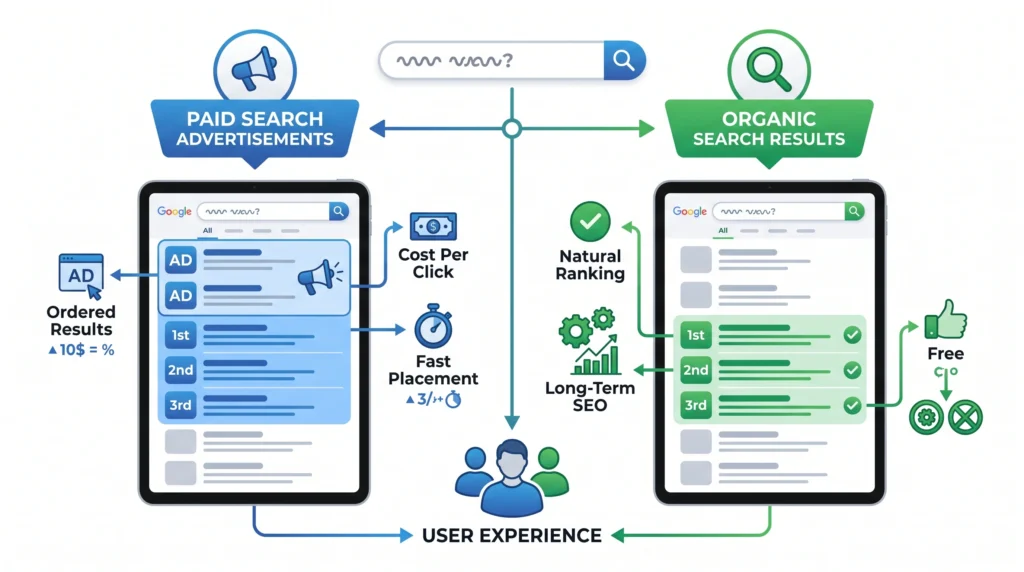
Search results can contain both organic and paid placements.
Organic Search Results
These are unpaid search results that appear based on search systems and their ranking processes.
Paid Search Results
These are advertisements where businesses pay for advertising placements according to the advertising platform and campaign settings.
SEO primarily focuses on improving organic search visibility.
What Makes a Website Easier for Search Engines to Understand?
A well-structured website can make information easier to understand and navigate.
Important areas include:
- Clear page titles
- Logical headings
- Useful content
- Descriptive URLs
- Internal links
- Accessible pages
- Mobile-friendly design
- Good website structure
- Descriptive image alt text
- Appropriate technical configuration
The goal is not to make a website complicated.
In fact, simplicity is often helpful.
A clear website structure benefits both users and search engines.
Common Search Engine Mistakes Beginners Make
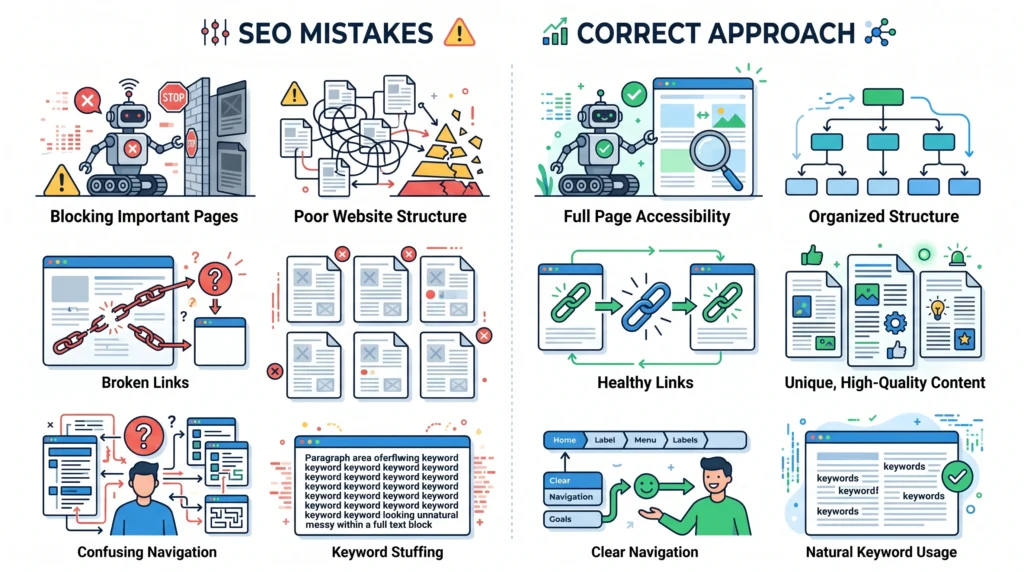
Blocking Important Pages
If important content is accidentally prevented from being crawled or indexed, it may not appear as expected in search.
Poor Website Structure
A confusing structure can make navigation and discovery harder.
Broken Internal Links
Broken links can create poor user experiences and disrupt website navigation.
Creating Content Only for Search Engines
Content should be created primarily to help people, not simply to manipulate rankings.
Keyword Stuffing
Repeating keywords excessively can make content unnatural and difficult to read.
How SEO Connects With Search Engines
Understanding search engines makes SEO easier.
Think about SEO as helping search engines answer three questions:
What Is This Page About?
Clear content, titles, headings, and structure help communicate the topic.
Can Search Engines Access This Page?
Technical accessibility and proper website configuration matter.
Is This Page Useful for This Search?
Relevance, search intent, content quality, and many other signals can influence how a page performs.
This is why SEO involves both content and technical foundations.
Simple Example: How a New Blog Post Can Appear in Search
Imagine you publish an article called:
“How to Start SEO for Beginners.”
The process might look like this:
Step 1 — Publish
You publish the article on your website.
Step 2 — Discovery
A search engine discovers the URL through crawling.
Step 3 — Processing
The search engine processes the page and its content.
Step 4 — Indexing
If the page is eligible, information about it may be stored in the search index.
Step 5 — Search Query
Someone searches for a related topic.
Step 6 — Retrieval and Ranking
The search system identifies relevant indexed information and determines what results to show.
Step 7 — Search Result
Your page may appear in the results if the search system determines it is relevant and useful for that query.
This is the basic journey from:
Webpage → Search Engine → Search Result → Visitor
How Search Engines Are Changing
Search is continuously evolving.
Search engines increasingly use advanced language understanding, machine learning, and AI-powered systems to help users find information.
This means website owners should avoid building SEO strategies around outdated tricks.
Instead, focus on fundamentals:
- Helpful content
- Clear information
- Strong website structure
- Good technical accessibility
- Relevant topics
- Search intent
- Good user experience
- Trustworthy information
The technology may change.
The need to provide useful information remains.
How This Knowledge Helps With SEO
Once you understand how search engines work, many SEO concepts become easier.
For example:
Crawling explains why website accessibility matters.
Indexing explains why getting a page discovered isn’t always enough.
Search intent explains why content must answer the user’s actual question.
Ranking explains why there is no single keyword trick that guarantees first place.
Internal linking explains why connecting related pages is useful.
Understanding the system gives you a much stronger SEO foundation.
Search Engine Basics Checklist
Crawling
- Important pages are accessible
- Internal links are working
- Website structure is logical
Indexing
- Important pages are eligible for indexing
- Unwanted pages are handled appropriately
- Indexing issues are monitored
Content
- Topic is clear
- Search intent is understood
- Content provides useful information
- Headings are organized
- Information is accurate
Technical SEO
- Website uses HTTPS
- Website works well on mobile
- Important pages are accessible
- XML sitemap is handled appropriately
- Technical problems are monitored
Internal Linking
- Related pages are connected
- Important pages receive useful internal links
- Anchor text describes the destination naturally
Frequently Asked Questions
How Do Search Engines Work in Simple Words?
Search engines discover webpages, process and store information about eligible pages, understand search queries and content, and then provide relevant results when people search.
What Are the Three Main Steps of Search?
The process is commonly simplified into:
Crawling → Indexing → Ranking/Serving
There are additional systems and processes involved, but this framework is useful for beginners.
What Is Crawling in SEO?
Crawling is the process through which search engine crawlers discover and access webpages.
What Is Indexing in SEO?
Indexing is the process of processing and storing information about webpages that a search engine may be able to retrieve for search results.
Does Google Crawl Every Website?
Search engines discover and crawl a huge number of webpages, but crawling and indexing are not guaranteed for every URL.
Website accessibility, technical configuration, content, and other factors can affect discoverability and indexing.
How Does Google Decide Which Page Ranks First?
Google uses complex automated systems and many signals to determine which results may be most relevant and useful for a particular search.
There is no single guaranteed ranking formula available to website owners.
Do Keywords Still Matter?
Yes, understanding the language people use to search can help you create relevant content.
But modern SEO is not about repeating keywords excessively.
Context, search intent, usefulness, and overall content quality matter too.
How Can I Make My Website Easier to Understand?
Use clear titles, logical headings, useful content, descriptive URLs, helpful internal links, accessible pages, and a well-organized website structure.
Final Thoughts
So, how do search engines work?
At the simplest level:
Crawl → Index → Understand → Rank → Serve
Search engines discover webpages, process information, understand content and queries, and then provide relevant results to users.
For SEO beginners, understanding this process is extremely valuable.
You don’t need to memorize complicated algorithms.
Instead, focus on the fundamentals:
Make your website accessible.
Create useful content.
Understand what people are searching for.
Match search intent.
Build a clear website structure.
Connect related pages with useful internal links.
And most importantly, create content that genuinely helps the person searching.
When you understand how search engines work, SEO stops feeling like a collection of confusing tricks and starts becoming a logical process.
Internal Linking Plan
Link this article naturally to:
Article 1
Anchor Text:
what is SEO
Article 3
Anchor Text:
keyword research
Article 4
Anchor Text:
on-page SEO
Article 5
Anchor Text:
technical SEO
Article 6
Anchor Text:
off-page SEO and link building
Final Publishing Checklist
- H1 used once
- H2 headings clearly labelled
- H3 headings clearly labelled
- Focus keyword included naturally
- SEO title prepared
- Meta title prepared
- Meta description prepared
- URL slug prepared
- Crawling explained
- Indexing explained
- Ranking explained
- Search intent explained
- Search algorithms explained
- Internal linking explained
- Organic vs paid search explained
- Common mistakes included
- Beginner checklist included
- FAQs included
- Image placement marked
- Image prompts included
- Image filenames included
- Alt text included
- Internal linking plan included
- Keyword stuffing avoided
- No guaranteed ranking claims
- Content is beginner-friendly
- Content is easy to scan
- Article provides genuine value
