

Not all backlinks are equally valuable.
A backlink is simply a link from one website to another. But the quality of that link can vary significantly depending on where it comes from, how it is placed, why it exists, and whether it is useful to real users.
A good backlink is usually not defined by a single metric.
Instead, backlink quality depends on a combination of factors such as:
- Relevance
- Trustworthiness
- Context
- Natural placement
- Editorial value
- User value
- The quality of the linking page
- The overall relationship between the two websites
In simple terms:
A good backlink is one that makes sense for both the content and the reader.
The goal should not be to collect the highest possible number of backlinks.
The goal should be to earn relevant, natural, and useful links that contribute to a healthy and sustainable online presence.
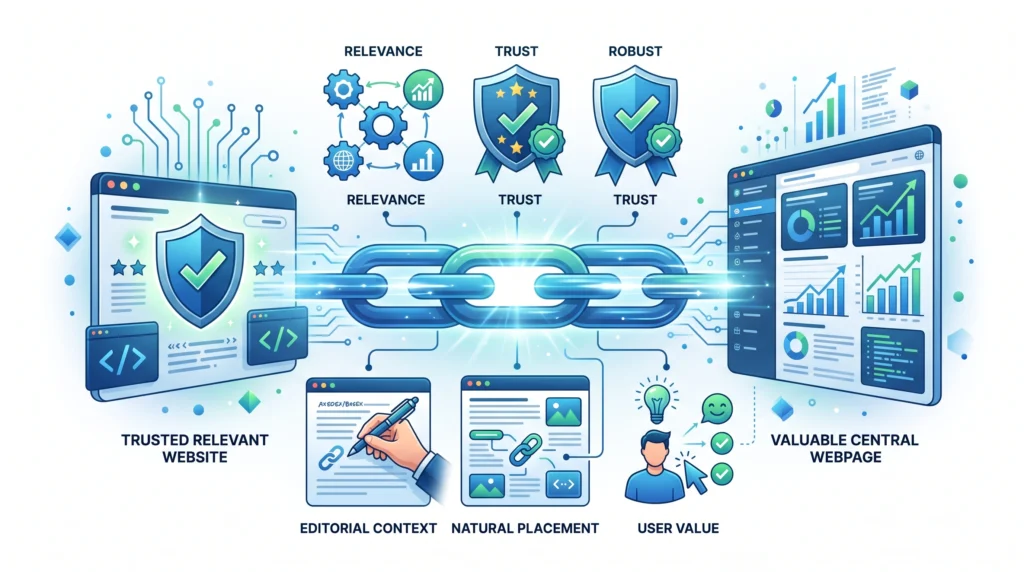
What Is a Quality Backlink?
A quality backlink is a link that provides meaningful value within its context.
For example, imagine you publish a detailed guide about technical SEO.
A respected digital marketing website writes an article about website optimization and naturally links to your guide as an additional resource.
This backlink may have several positive characteristics:
- The topics are relevant
- The link appears naturally
- The surrounding content provides context
- Readers may benefit from clicking it
- The linking website serves a real audience
Compare that with a random website about an unrelated topic adding your link to a page containing hundreds of other links.
Both are technically backlinks.
But they are not equal in quality.
The Main Factors That Make a Backlink Good
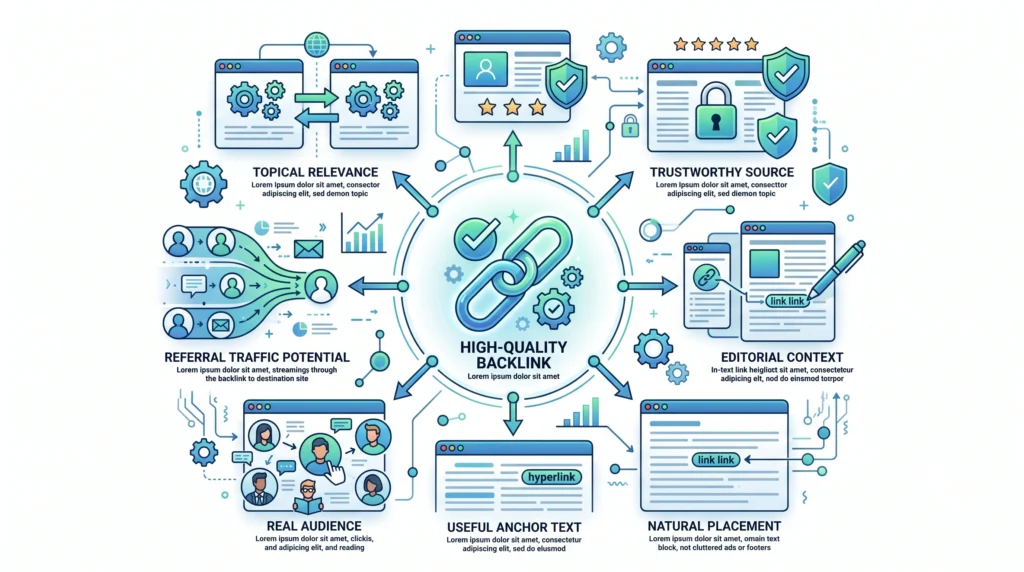
A strong backlink usually involves several important factors.
1. Topical Relevance
Relevance is one of the most important factors to consider.
The linking website or page should have a meaningful connection to your content.
For example:
A marketing website linking to an SEO guide makes sense.
A website about gardening linking randomly to an SEO guide may provide much less contextual relevance.
Relevance can exist at different levels:
- Website-level relevance
- Topic-level relevance
- Page-level relevance
- Contextual relevance
The closer the connection between the content and the link, the more natural the backlink may appear.
2. A Trustworthy and Legitimate Source
A backlink from a legitimate and trustworthy website can be more valuable than one from a suspicious or low-quality source.
When evaluating a website, consider questions such as:
- Does it publish useful content?
- Does it have a clear purpose?
- Does it appear to serve a real audience?
- Is the content regularly maintained?
- Does the website appear legitimate?
- Are the pages overloaded with spammy links?
Do not rely entirely on one third-party SEO metric.
A high score from a tool does not automatically mean every backlink from that website is valuable.
Look at the complete picture.
3. Natural Editorial Placement
A good backlink should exist for a reason.
The best links are often placed because a writer, editor, or website owner believes the linked resource provides additional value.
For example:
“For a more detailed explanation of keyword research, see this beginner’s guide.”
The link has a clear purpose.
It helps the reader find more information.
That is different from placing a random link into unrelated content.
Natural editorial placement is usually a stronger foundation for sustainable link building.
4. Relevant Surrounding Content
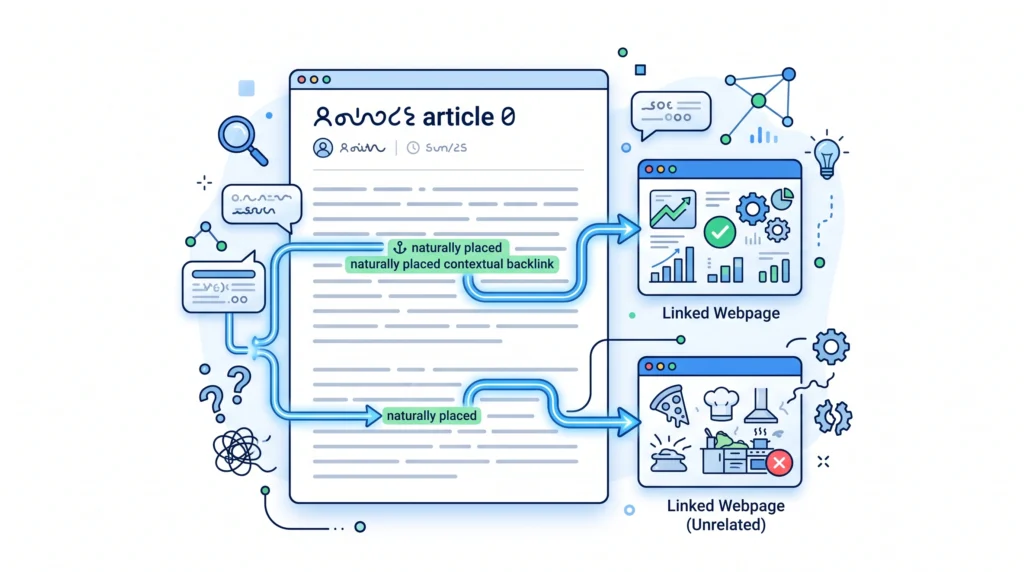
The content surrounding a backlink provides important context.
For example, imagine an article discussing:
How to perform keyword research
Within that discussion, the writer links to your detailed guide on keyword research.
The connection is clear.
The surrounding content helps explain why the link exists.
Contextually relevant links are generally more useful for both users and search engines than links placed randomly.
5. Useful Anchor Text
Anchor text is the clickable text of a hyperlink.
For example:
Learn more about technical SEO.
The words technical SEO are the anchor text.
Good anchor text should generally:
- Describe the destination naturally
- Help users understand what they will find
- Fit naturally within the sentence
- Avoid unnecessary keyword repetition
A natural backlink profile may include different types of anchor text, such as:
- Brand names
- Article titles
- URLs
- Generic phrases
- Relevant descriptive phrases
Avoid trying to force the exact same keyword into every backlink.
Natural variation is normal.
6. Potential for Referral Traffic
A quality backlink can provide value beyond SEO.
If the link is placed on a relevant website with an interested audience, real visitors may click through to your website.
This is known as referral traffic.
Ask yourself:
Would someone reading this page realistically click the link?
If the answer is yes, the backlink may provide genuine value beyond search visibility.
7. A Link to a Useful Page
The destination page matters too.
A good backlink should point to a page that provides value.
For example:
- A detailed guide
- Original research
- A useful tool
- A relevant product page
- A helpful resource
- A data-driven study
Building links to weak or unhelpful pages is usually more difficult because there is little reason for others to recommend them.
The best links often point toward pages that genuinely deserve attention.
Good Backlinks vs Bad Backlinks
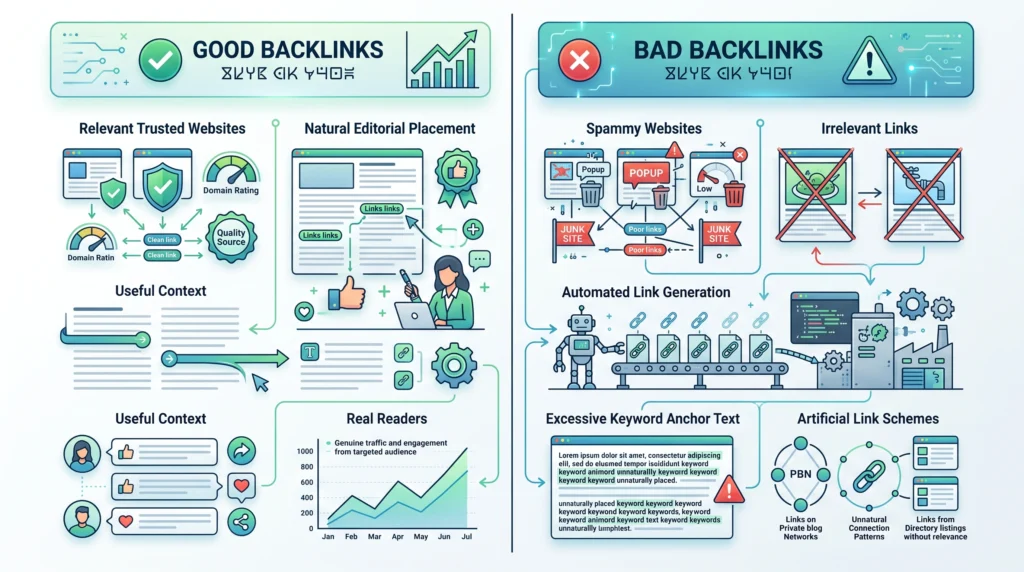
| Good Backlinks | Bad Backlinks |
|---|---|
| Relevant to the topic | Completely irrelevant |
| Naturally placed | Artificially inserted |
| Useful for readers | Created only for manipulation |
| From legitimate sources | From suspicious or spammy sources |
| Contextually relevant | Randomly placed |
| Potential referral traffic | No realistic user value |
| Natural anchor text | Over-optimized anchor text |
The goal is not to label every backlink as simply “good” or “bad.”
Backlink evaluation is often more nuanced.
Instead, look for patterns and focus on earning links that provide genuine value.
Does Website Authority Matter?
Website authority can be a useful concept when evaluating potential backlink opportunities.
A well-established website with a strong reputation may provide a valuable backlink opportunity.
However, authority should not be the only factor.
Consider this example:
Website A
- Extremely popular
- Broad and unrelated topic
- Your link is placed on a weak page
Website B
- Smaller website
- Highly relevant niche
- Strong audience interest
- Your link appears naturally in a useful article
In some cases, Website B may provide a more relevant and valuable opportunity.
This is why:
Relevance + Context + Quality + User Value
can be more useful than chasing a single authority score.
Does the Number of Outgoing Links Matter?
The number of links on a page can provide useful context.
A resource page with a reasonable number of carefully selected links may be valuable.
However, a page containing hundreds of unrelated links may provide less value.
Be cautious when you see pages that appear designed primarily for selling or exchanging links.
Ask:
- Does the page provide useful content?
- Are the links relevant?
- Is there a clear editorial purpose?
- Would real users find the page helpful?
The goal is to understand the quality of the page—not simply count links.
Does Link Placement Matter?
Yes, placement can matter.
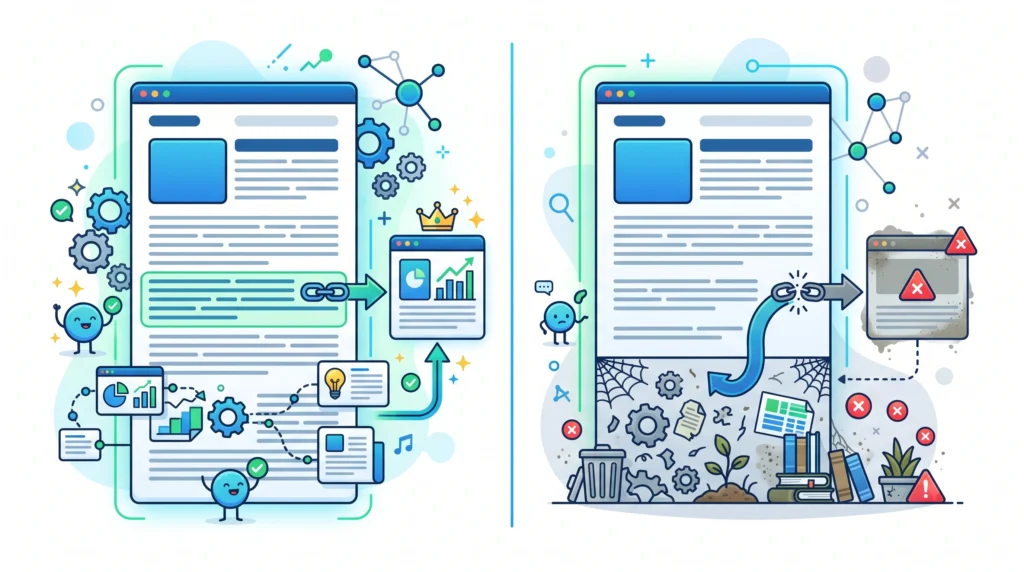
A backlink placed naturally within useful editorial content may provide more contextual value than a link placed randomly.
For example:
Contextual placement:
A writer discussing SEO links to your SEO guide.
Less relevant placement:
Your SEO guide appears randomly in a list of unrelated website links.
The best placement usually makes sense for the reader.
Does Dofollow vs Nofollow Affect Backlink Quality?
Link attributes can provide additional information about a link.
You may encounter:
- Standard links
nofollowsponsoredugc
A link with a nofollow attribute should not automatically be considered worthless.
Nofollow links may still provide:
- Referral traffic
- Brand visibility
- Audience exposure
- Natural online discovery
Similarly, sponsored and user-generated content links have specific purposes.
Instead of judging a backlink only by its attribute, consider its broader value and context.
What Makes a Backlink Look Unnatural?
Some backlink patterns may appear artificial or manipulative.
Examples include:
- Large numbers of links created quickly without a clear reason
- Repeated use of identical keyword-rich anchor text
- Links from unrelated websites
- Automated link generation
- Low-quality private networks
- Spam comments
- Large-scale paid link schemes
A natural backlink profile usually develops through different sources and contains variation.
The goal should be to earn links because they make sense—not because you are trying to manufacture a specific pattern.
How to Evaluate the Quality of a Backlink
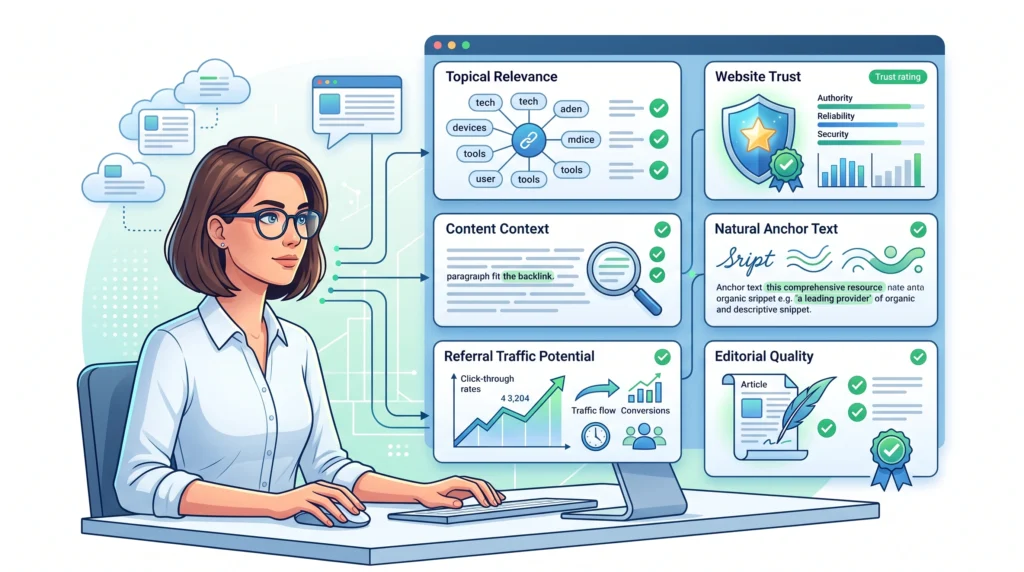
Use the following questions.
Is the Website Relevant?
Does the website cover topics related to your industry?
Is the Linking Page Relevant?
The individual page matters—not just the entire website.
A relevant website may still contain an unrelated page.
Does the Link Make Sense?
Would a reader understand why the link exists?
Is the Website Legitimate?
Does the website appear to provide genuine value to users?
Is the Link Naturally Placed?
Does it fit naturally within the content?
Could It Send Referral Traffic?
Would real visitors potentially click the link?
Is the Anchor Text Natural?
Does the clickable text describe the destination without looking forced?
A Simple Quality Backlink Framework
You can use this simple framework when evaluating backlink opportunities:
Relevance
↓
Trust
↓
Context
↓
Natural Placement
↓
User Value
↓
Referral Potential
If most of these factors are strong, the backlink may be worth pursuing.
However, there is no universal formula that guarantees a backlink will improve rankings.
The goal is to make informed decisions based on multiple signals.
How to Earn More Quality Backlinks
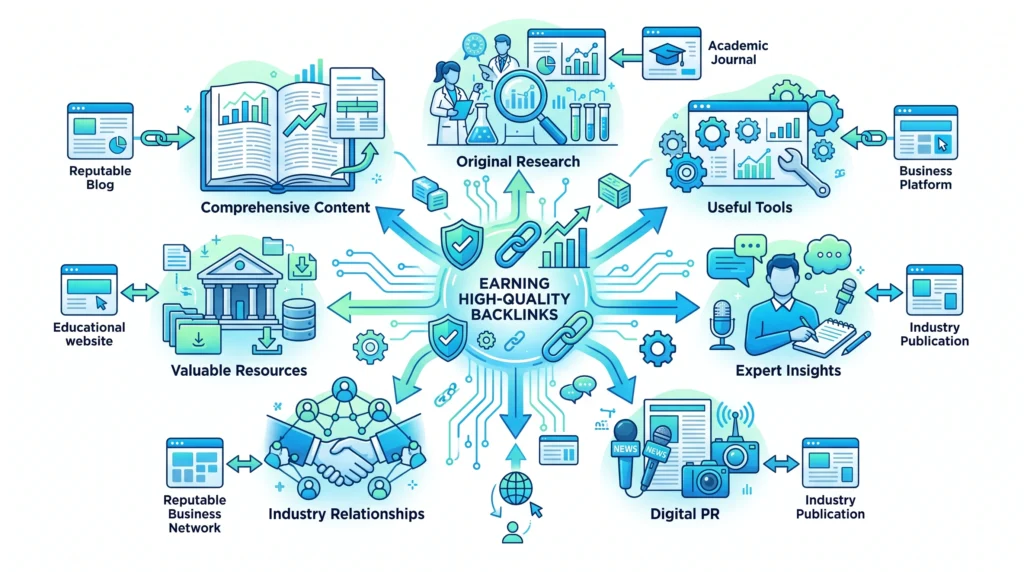
The best way to earn quality backlinks is to create something worth referencing.
Create Exceptional Resources
Build guides, tools, templates, and educational resources that solve real problems.
Publish Original Data
Research, surveys, statistics, and experiments can provide valuable information that others may reference.
Develop Industry Relationships
Build genuine connections with people and organizations in your industry.
Contribute Useful Expertise
Share valuable insights through interviews, expert contributions, and relevant publications.
Use Digital PR
Create stories, research, or campaigns that relevant journalists and publications may want to discuss.
Improve Existing Content
Sometimes updating and improving an existing resource can make it more useful and more likely to earn natural references.
Common Mistakes When Evaluating Backlinks
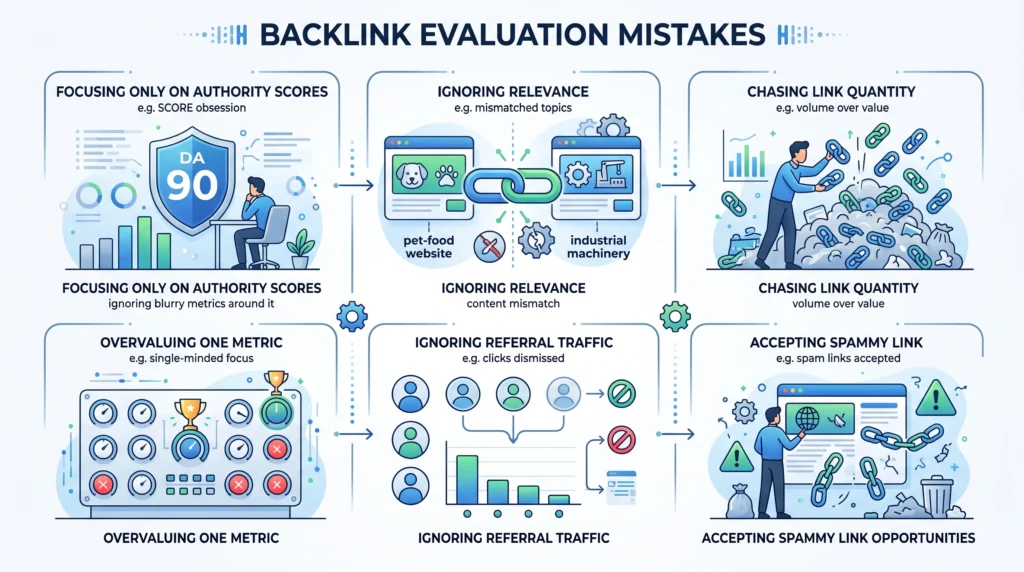
Focusing Only on Authority Metrics
Third-party metrics can be useful, but they do not tell the complete story.
Ignoring Relevance
A high-metric website is not automatically a good backlink opportunity if the topic is completely unrelated.
Ignoring the Linking Page
Evaluate the actual page where the link will appear.
Chasing Quantity
More backlinks do not automatically mean more value.
Ignoring Referral Traffic
A backlink can provide real business value through visitors—not only SEO.
Assuming Every Nofollow Link Has No Value
Nofollow links can still support visibility, referral traffic, and brand awareness.
Quality Backlink Checklist
Before pursuing a backlink, ask:
Relevance
- Is the website relevant?
- Is the specific linking page relevant?
- Does the link fit naturally?
Quality
- Does the website appear legitimate?
- Does it serve a real audience?
- Does it publish useful content?
Context
- Is the surrounding content relevant?
- Is the link editorially justified?
- Is the anchor text natural?
User Value
- Could real users benefit from the link?
- Could the link generate referral traffic?
Sustainability
- Is the opportunity free from manipulative schemes?
- Would the link still make sense without SEO benefits?
If the answer to most of these questions is yes, the backlink may be a valuable opportunity.
Frequently Asked Questions
What Makes a Backlink High Quality?
A high-quality backlink is generally relevant, naturally placed, contextually appropriate, useful for readers, and earned from a legitimate website.
Are High Authority Backlinks Always Better?
Not necessarily. Relevance, context, page quality, and user value also matter.
Is a Nofollow Backlink Bad?
No. Nofollow backlinks can still provide referral traffic, brand visibility, and audience exposure.
How Can I Check Backlink Quality?
Evaluate the relevance of the website and page, the context of the link, the legitimacy of the source, anchor text, natural placement, and potential referral value.
How Many Quality Backlinks Do I Need?
There is no fixed number. Your needs depend on your industry, competition, content, and existing online presence.
Can I Buy Quality Backlinks?
Large-scale paid link schemes or manipulative link-building practices can create unnecessary risk. Earning relevant editorial links is generally a more sustainable approach.
Are All Backlinks Good for SEO?
No. Backlinks can vary significantly in quality, relevance, and context.
Final Thoughts
A good backlink is not defined by one number.
It is usually the combination of several important factors:
Relevant Source
Legitimate Website
Relevant Content
Natural Placement
Useful Anchor Text
Real User Value
Potential Referral Traffic
The strongest backlink opportunities are often the ones that make sense even without thinking about SEO.
Ask yourself:
“Would I still want this website to link to me if search engines did not exist?”
If the answer is yes, you may be looking at a genuinely valuable backlink opportunity.
Focus on earning links through useful content, original ideas, strong relationships, and genuine expertise.
That strategy may take longer than chasing shortcuts, but it is far more sustainable than building a backlink collection that looks like it was assembled during an SEO clearance sale. 😄
Related Articles
Pillar 5 — Off-Page SEO & Link Building
What Is Off-Page SEO?what-is-off-page-seo
Article 18:
What Are Backlinks?backlinks
Article 19:
Link Building: Complete Beginner’s Guidelink-building-guide
Related Article:
Anchor Text: Complete Guideanchor-text
Internal Linking Suggestions
Naturally link this article to:
- What Is Off-Page SEO?
- What Are Backlinks?
- Link Building: Complete Beginner’s Guide
- Anchor Text: Complete Guide
- What Is SEO?
Recommended anchor text:
- quality backlinks
- high-quality backlinks
- what makes a good backlink
- link building
- relevant backlinks
- natural backlinks
- anchor text
- off-page SEO
Also link this article back to the main Pillar 5 — Off-Page SEO & Link Building page.
Publishing Checklist
- H1 clearly labelled
- H2 headings clearly labelled
- H3 headings clearly labelled
- SEO title prepared
- Meta title prepared
- Meta description prepared
- URL slug prepared
- Focus keyword included naturally
- Secondary keywords used naturally
- Positive words included naturally
- Caution words included naturally
- Quality backlinks clearly defined
- Main backlink quality factors explained
- Relevance explained
- Trustworthiness explained
- Editorial placement explained
- Surrounding context explained
- Anchor text explained
- Referral traffic explained
- Good vs bad backlinks comparison included
- Website authority discussed
- Link placement explained
- Nofollow links discussed
- Unnatural backlink patterns explained
- Backlink evaluation framework included
- Strategies for earning quality backlinks included
- Common evaluation mistakes included
- Quality backlink checklist included
- FAQs included
- Image placements marked
- Image prompts included
- Image filenames included
- Alt text included
- Internal linking suggestions included
- No keyword stuffing
- No guaranteed ranking claims
- No guaranteed backlink claims
- Beginner-friendly language used
- Content is easy to scan
- Content provides genuine value
